
When Does Alternative Stop Being Alternative?
How a conference reminded me why access to all healing options is a fundamental human right.

The Integrative Personalised Medicine (IPM) Conference 2026 has just taken place at London’s Queen Elizabeth II Centre, and it feels like something important is happening.

When an event is opened by Sir Michael Dixon, Head of the Royal Medical Household, it’s difficult to dismiss it as a fringe gathering. Integrative medicine is no longer knocking at the door of mainstream healthcare - it is steadily walking through it.
That matters.
“Patient-centred, holistic care isn’t an alternative. It should be the standard.”
I was reminded of another special occasion:
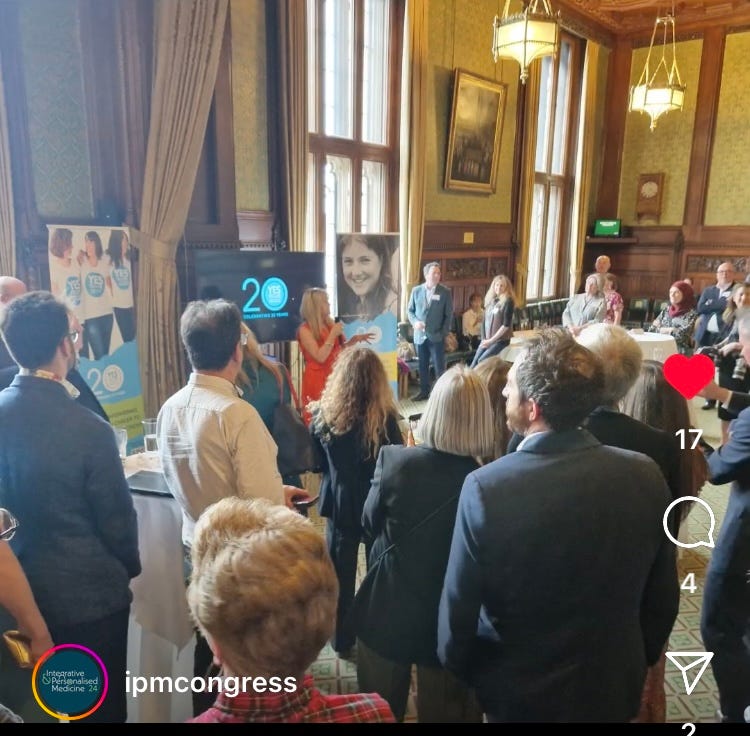
Last April I was honoured to attend the 20th anniversary celebration of Yes to Life at the House of Commons on behalf of Double-zero. During the event, a letter from Sir Michael Dixon was read, recognising the growing importance of integrative approaches to healthcare.
Robin Daly MBE, Founder of Yes to Life, captures the momentum perfectly:
“Five years into the life of IPM, it’s heartening to see the many ways in which this formidable event has moved - and continues to move - the needle in the direction of integration, and to establish patient-centred, holistic care as the rational choice and a fundamental human right that we all need and deserve in times of ill health.”
That phrase has stayed with me.
A fundamental human right.
Patient-centred care.
Holistic care.
Could we really be moving towards a future where these ideas become the norm?
I sincerely hope so.
A powerful reminder of why this matters is Team Hannah winner of Best Inspirational Film at this year’s Cannes World Film Festival. It’s a moving, free-to-watch, 54-minute documentary that resonated deeply with me and will, I suspect, with many others navigating serious illness.
“Will we see truly integrative care become the norm in our lifetimes?”
There are encouraging signs.
The IPM Congress continues to grow year after year, bringing together clinicians, researchers and practitioners who believe healthcare works best when we combine the best available evidence with genuinely personalised care.
Even more striking is the growing public demand.
A recent BMJ Open publication reported that:
“Two-thirds of adults in the UK now engage with Traditional, Complementary and Integrative Medicine.”
At what point do we stop calling it alternative medicine?
When most people are already using it alongside conventional healthcare, perhaps the language itself needs to evolve.
For me, this isn’t an academic debate.
It’s deeply personal.
Back to 2017. My own diagnosis of stage 3 HER2+ breast cancer.
If I knew then what I know today, I would have made very different choices.
Not because conventional medicine doesn’t have an essential place - it absolutely does - but because I didn’t even know what questions to ask. I didn’t know where to find balanced, trustworthy information. I didn’t know who to believe, and when you’re facing a life-changing diagnosis, the stakes couldn’t be higher.
“I wish with all my heart that I’d known in 2017 what I know now.”
That’s exactly why Double-zero exists.
Our goal has never been to tell people what to do.
It’s to provide a central, unbiased resource so that people can make informed decisions with access to the widest possible range of evidence and perspectives.
Because knowledge really is power.
And informed choice matters.
When your health is on the line, access to all the evidence and all the options shouldn’t be a privilege, it should be a right.
This movement is being driven by extraordinary people who are challenging old assumptions and helping to reshape healthcare.
Many of those change-makers will be recognised at the upcoming Yes to Life Awards in London this September. Here’s last year’s event at Kew Gardens.
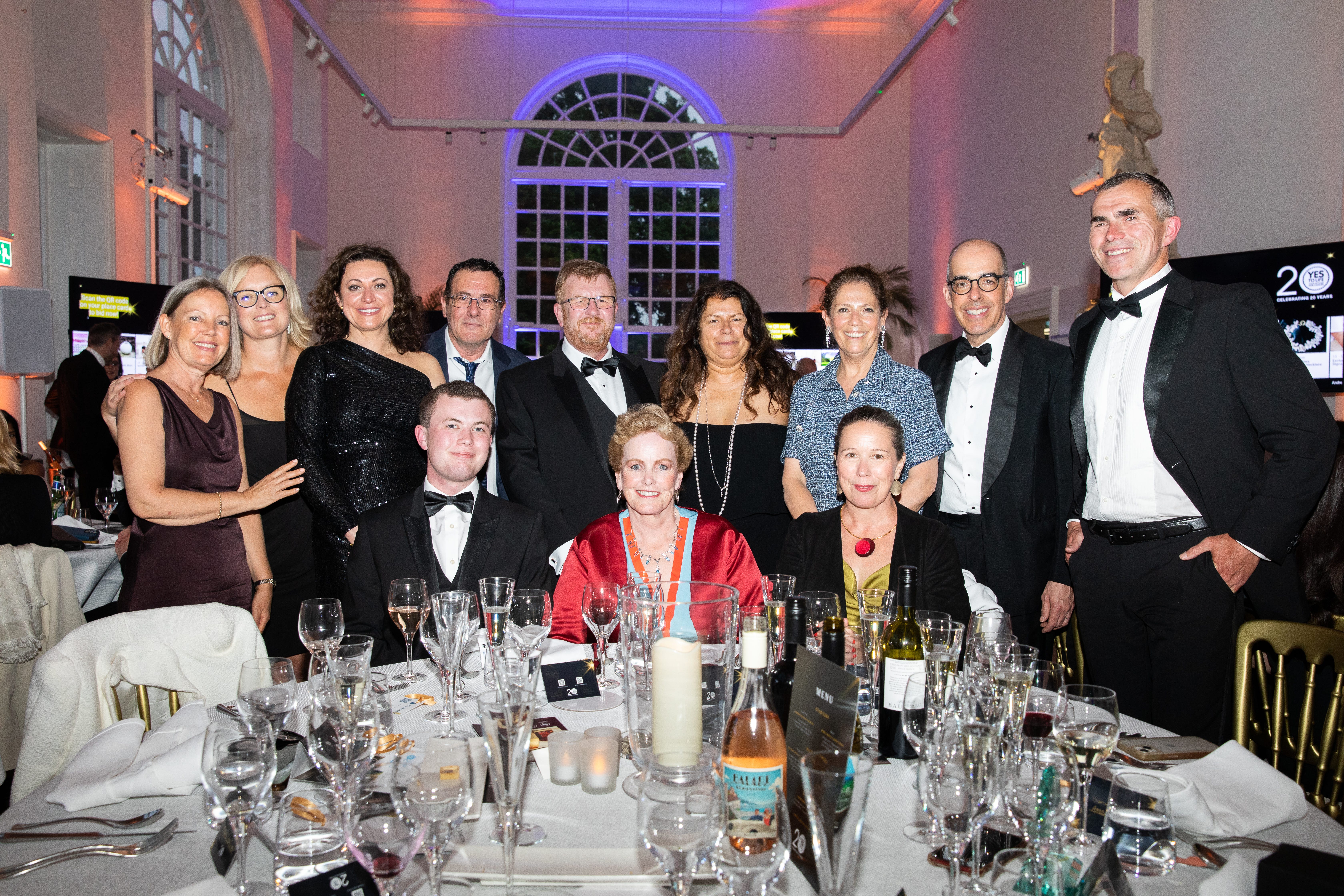
I’m incredibly proud that Double-zero has once again been nominated - one of only a handful of organisations to receive nominations for a second consecutive year.
Many of the other nominees are also featured throughout our resource library, reflecting the growing community working towards more integrated, compassionate healthcare.
If you believe in what we’re trying to achieve, we’d be hugely grateful for your vote.
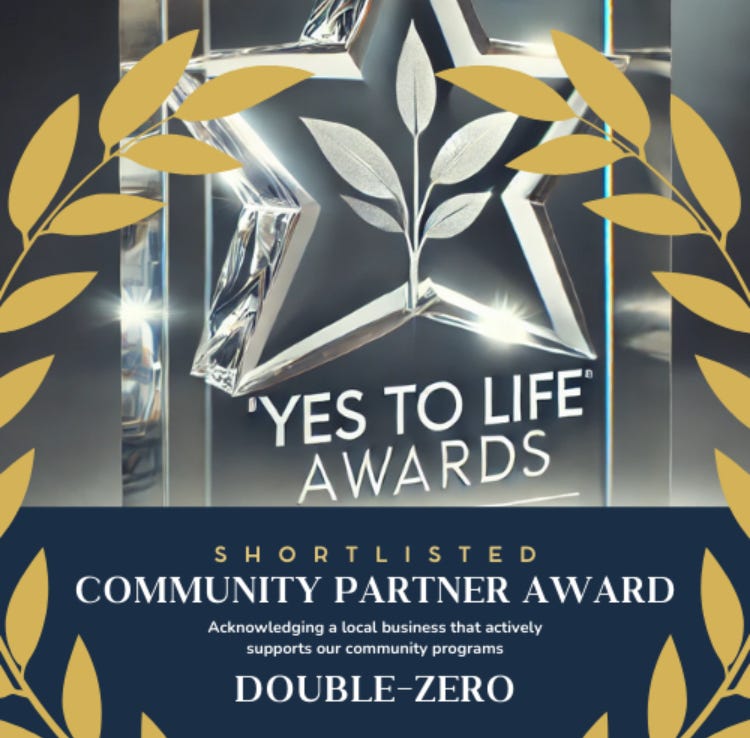
Every vote helps amplify the message that people deserve access to all of their healing options - not someday, but now.
Because I couldn’t agree more with Robin Daly.
Patient-centred, holistic care isn’t a luxury, it’s becoming impossible to ignore.
It’s something we all need. The future of healthcare isn’t either/or. Informed choice should be at the centre.
And, I believe, it’s something we all deserve.